AI for Blockchain Scalability in Supply Chains
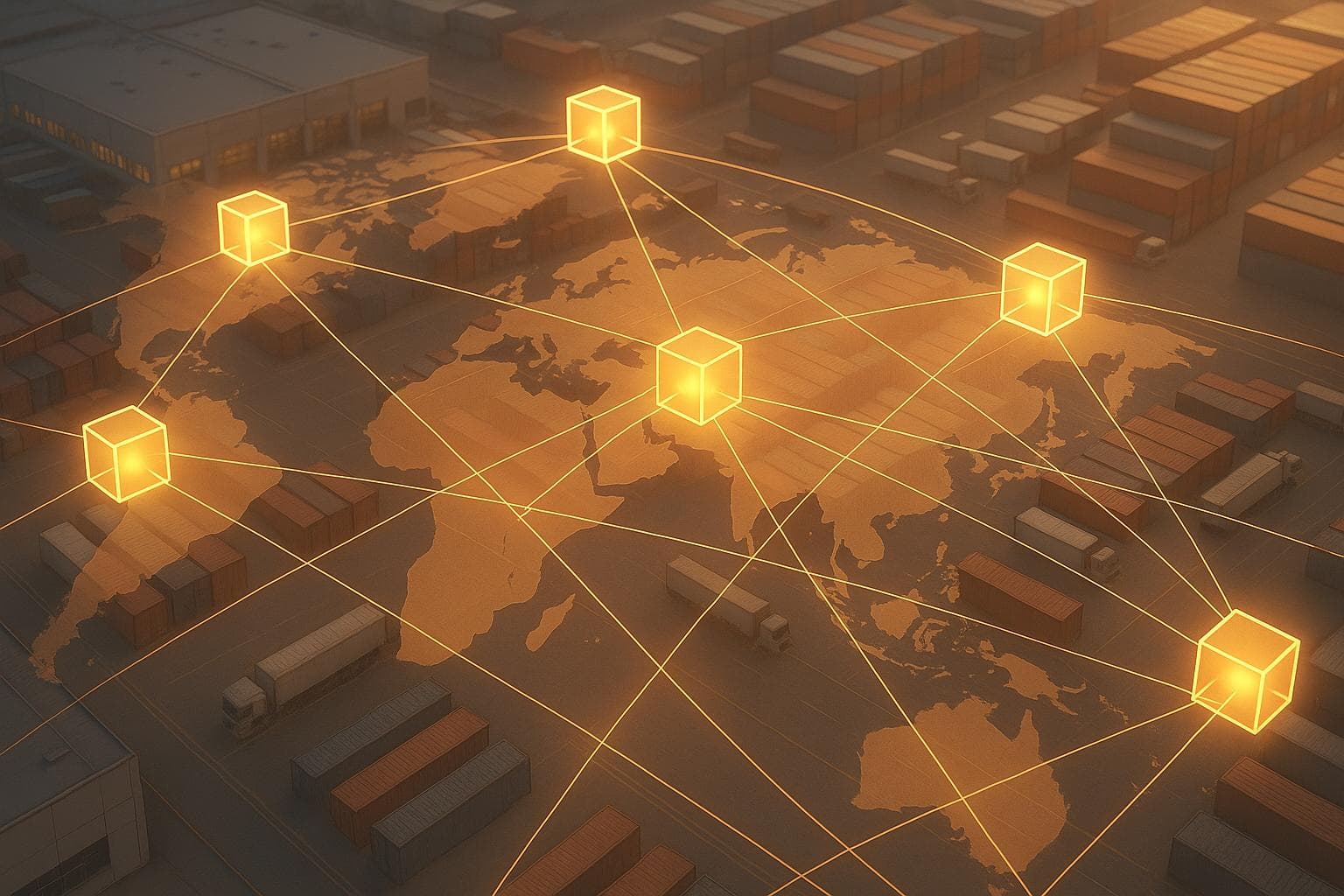
AI for Blockchain Scalability in Supply Chains
Blockchain technology improves supply chain transparency and traceability but struggles with scalability issues like slow transaction speeds, high energy use, and network congestion. AI offers solutions by optimizing blockchain performance:
- Faster Transactions: AI streamlines consensus mechanisms, reducing delays.
- Cost and Energy Efficiency: Predictive AI allocates resources dynamically, cutting expenses and energy use.
- Improved Operations: AI analyzes patterns to prevent bottlenecks and ensure accurate, real-time updates.
Industries like food, pharmaceuticals, and shipping are already leveraging AI-powered blockchain systems to enhance tracking, reduce delays, and improve compliance. With continued advancements, integrating AI with blockchain is becoming a practical choice for supply chain leaders looking to improve efficiency and reduce costs.
How AI and Blockchain are Transforming the Supply Chain Management
Blockchain Scalability Problems in Supply Chains
Supply chains deal with massive transaction volumes daily, from tracking inventory to confirming shipments. Traditional blockchain systems often struggle to handle this workload, leading to bottlenecks that hinder their broader use in these networks.
Transaction Speed and Delay Issues
Most blockchain networks fall short when it comes to transaction speed, failing to meet the demands of modern supply chains. For instance, Bitcoin and Ethereum process only a handful of transactions per second, while systems like Visa handle tens of thousands. This lag becomes a problem when, say, a shipment arrives at a warehouse. Blockchain confirmation might take minutes - or even hours - delaying inventory updates and affecting product availability for customer orders.
Network congestion makes things worse, stretching confirmation times from seconds to minutes and disrupting the real-time visibility supply chains rely on. When multiple stakeholders need to validate transactions, each additional step adds to the delay. On top of that, the computational requirements of these systems drive up costs, further complicating their use in fast-paced environments.
High Computing Costs and Energy Use
Blockchain systems, especially those using proof-of-work mechanisms, demand significant computational power and energy. Running blockchain nodes requires high-performance servers that consume a lot of electricity, which can lead to hefty operational expenses for large-scale supply chains. For organizations aiming to reduce their carbon footprint, this energy demand is a major drawback.
During periods of heavy network activity, transaction fees can spike unpredictably, making cost management a challenge. Additionally, as supply chains generate vast amounts of data, the growing storage needs of blockchain systems add to long-term expenses. These high costs and energy demands create inefficiencies that many companies find hard to justify.
Effects on Daily Operations
Scalability issues in blockchain technology ripple across various aspects of supply chain operations. For example, delayed inventory updates can lead to overselling, frustrating customers and damaging trust. Shipment tracking also suffers when outdated transaction data prevents accurate delivery estimates or timely responses to shipping problems.
Quality control processes face setbacks, too. Delays in recording critical data - like food safety checks or pharmaceutical testing - can slow down responses to potential quality concerns. Financial reconciliation becomes more complex when there's a lag between real-world events and their blockchain records, often requiring manual fixes that increase the risk of errors. These disruptions make it harder for customer service teams to provide accurate, up-to-date information.
These challenges explain why many organizations remain hesitant to fully adopt blockchain in their supply chains. In the next section, we’ll dive into how AI can help tackle these scalability issues directly.
AI Solutions for Better Blockchain Performance
AI is stepping up to tackle blockchain's scalability challenges, offering solutions that significantly boost performance. By speeding up transaction processes, fine-tuning resource allocation, and accurately predicting demand, AI is reshaping how blockchain operates in supply chains.
AI-Improved Consensus Systems
Consensus mechanisms like proof-of-work often demand heavy computational power to validate transactions. AI steps in to streamline this process by refining how validators are selected and tweaking consensus parameters in real time. The result? A more efficient system that keeps blockchain's security intact.
Smart Resource Distribution
AI brings flexibility to resource management by analyzing transaction traffic and network conditions. It prioritizes tasks and redistributes resources to avoid bottlenecks, ensuring smoother operations and faster response times.
AI-Based Resource Planning
Using historical data, AI predicts computational needs, fine-tuning node configurations and scheduling non-essential tasks during low-traffic periods. This not only cuts down costs but also strengthens the system's overall resilience.
Measured Results and Business Impact
By integrating AI into blockchain systems, businesses are seeing clear, measurable advancements. These AI-driven blockchain solutions are bringing noticeable technical and operational benefits, particularly in streamlining supply chains.
Performance Improvements
AI fine-tunes processes like consensus mechanisms and resource allocation, leading to faster transaction speeds and higher throughput. Its predictive abilities help prevent network congestion and address potential system disruptions before they occur, creating a more reliable network overall.
By dynamically managing resources, AI ensures peak performance during high-demand periods while also cutting down on energy use. This balance not only keeps operations running smoothly during busy times but also improves efficiency. Faster response times mean critical data - like product history and tracking details - gets updated quickly, keeping operations seamless and on schedule.
Business Results
These technical gains translate directly into real-world business benefits. Shorter operational delays mean workflows stay consistent and uninterrupted. Features like automated reporting and real-time data access simplify regulatory compliance, making it easier to meet deadlines and avoid penalties.
AI also enhances supply chain visibility by providing detailed insights into product movements. This helps identify bottlenecks, optimize delivery routes, and quickly address any disruptions. Faster order processing improves customer satisfaction by offering more accurate delivery timelines. On top of that, AI's predictive analytics strengthen risk management by flagging potential issues early, allowing businesses to take proactive steps to maintain steady operations.
Ultimately, these advancements lead to higher ROI by improving efficiency and minimizing disruptions, making the investment in AI-powered blockchain solutions worthwhile. The following examples from various industries highlight these measurable benefits in action.
sbb-itb-1c5debd
Industry Examples of AI-Blockchain Implementation
Industries are increasingly turning to AI-powered blockchain solutions to simplify processes, improve traceability, and enhance responsiveness.
Food and Agriculture Tracking
For food companies, ensuring quick and accurate tracking of products from farms to store shelves is critical - especially during recalls or quality concerns. One major retailer has replaced outdated paper-based systems with an AI-enhanced blockchain platform, drastically reducing the time needed to trace contaminated food. In another example, a global food company uses AI-driven blockchain technology to monitor coffee beans throughout their journey - from the farm to processing and packaging. This system provides detailed records of farming practices and quality checks while handling large-scale operations efficiently. These advancements in traceability are also influencing similar improvements in pharmaceutical regulations and safety measures.
Drug Manufacturing and Distribution
Pharmaceutical companies are leveraging AI-blockchain systems to track products through their entire lifecycle, from sourcing raw materials to delivering finished products to patients. One company has implemented a solution that streamlines data processing and accelerates validation, resulting in faster authentication and improved compliance with regulations. This approach has also helped reduce counterfeit drugs in the supply chain. Another firm applies the technology to clinical trial supply chains, enhancing reporting accuracy and predicting potential supply shortages to minimize delays. The transportation and logistics industries are also benefiting from these integrations, particularly in optimizing delivery routes and schedules.
Shipping and Freight Management
Managing vast amounts of tracking data and making quick decisions are everyday challenges for transportation companies. To address these, major players in shipping and logistics are adopting AI-powered blockchain platforms. For instance, a global shipping company uses such a platform to streamline documentation and improve cargo visibility across its container network. Other logistics firms combine AI with blockchain to optimize package routing and monitor conditions for temperature-sensitive shipments, ensuring timely deliveries and maintaining product quality.
These examples highlight how integrating AI with blockchain technology is transforming supply chain operations. The success of early adopters is inspiring wider industry usage and opening doors to future advancements in interconnected systems and operational efficiency.
Upcoming Developments in AI-Blockchain Integration
AI and blockchain technologies are advancing quickly, moving from experimental stages to real-world applications. These developments aim to tackle current challenges and unlock new possibilities.
Multi-Chain Networks and Mixed Systems
One of the biggest hurdles in blockchain adoption, especially in supply chains, is the inability of different blockchain networks to communicate with each other. Interoperability - the seamless exchange of data across multiple blockchain networks - offers a solution. It enables secure data sharing and eliminates the isolation that comes with single blockchain systems.
Emerging multi-chain architectures allow supply chain data to move freely between platforms. This flexibility lets businesses pick the best blockchain for specific tasks, tailoring solutions to their needs. On top of that, hybrid systems are gaining momentum. These systems combine blockchain technology with traditional databases and enterprise resource planning (ERP) systems, ensuring businesses can use blockchain only where its unique strengths - like transparency and immutability - make the most impact. This approach helps optimize both costs and performance.
AI is a game-changer in managing these complex environments. It determines how data should flow by analyzing factors like transaction costs, speed, and security. Machine learning algorithms can even pinpoint which parts of the supply chain should rely on blockchain and which can operate more efficiently with traditional systems.
Advanced AI for System Optimization
AI is also driving improvements in blockchain performance. Machine learning models are now capable of predictive analytics, forecasting network congestion before it happens. This allows systems to adapt dynamically, with real-time consensus mechanisms selecting the most efficient methods based on current network conditions.
Resource prediction models are another exciting development. These models use historical and real-time data to estimate computing and storage needs, allowing blockchain infrastructures to scale up or down as demand changes. This not only prevents bottlenecks but also helps companies avoid unnecessary expenses.
Edge computing is another area where AI is making an impact. By deciding whether blockchain operations should be processed at the edge or in centralized data centers, AI helps reduce latency and improve responsiveness - critical for time-sensitive supply chain tasks.
AI is even optimizing the performance of smart contracts. By analyzing thousands of contracts, these systems can identify inefficiencies and suggest ways to lower gas fees, making blockchain usage more cost-effective.
The combination of AI and blockchain is opening up new opportunities for supply chain professionals. Companies that stay updated on these advancements will be better equipped to adopt flexible, efficient, and scalable blockchain solutions as they become available.
Key Points for Supply Chain Leaders
Recent advancements in AI-powered blockchain solutions are opening up new possibilities for supply chain leaders aiming to embrace digital transformation. These technologies are already showing measurable gains in transaction speed, cost reduction, and operational efficiency across multiple industries.
Initial data highlights how AI-optimized consensus mechanisms and resource allocation can significantly enhance processing speeds while cutting computing costs. These advancements directly support smarter and faster operational decision-making.
Adopting these technologies early is critical. As the tech landscape shifts toward multi-chain architectures and hybrid systems offering more flexibility, organizations that act now will be better positioned to reap the full benefits as these solutions evolve and mature.
To maximize impact, leaders should target use cases where blockchain’s core strengths - transparency, immutability, and traceability - can deliver the most value. For instance, industries like food safety, pharmaceutical authentication, and high-value logistics have already seen encouraging results. Launching pilot projects in these areas can help organizations build expertise while demonstrating clear returns on investment.
On the technical front, infrastructure challenges are becoming less daunting. AI advancements such as predictive analytics for network congestion, automated resource scaling, and smarter consensus mechanisms are simplifying blockchain adoption, making it more accessible for organizations of all sizes.
Cost efficiency is also improving. AI-optimized blockchain solutions are reducing energy use, lowering transaction fees, and enhancing throughput. When combined with the added benefits of transparency and security, these systems are starting to rival traditional technologies in terms of total ownership costs.
By integrating AI and blockchain, organizations can gain a competitive advantage through better supply chain visibility, stronger collaboration with partners, and improved compliance with regulations. These insights align closely with current trends shaping the industry, as explored in the next section.
Finally, staying updated on the latest research is essential. This field is evolving quickly, with new optimization techniques and implementation strategies emerging regularly. Resources like SupplyChainBriefing offer weekly summaries of AI research in supply chain management, breaking down complex findings into actionable insights for strategic decision-making.
FAQs
How does AI help make blockchain more scalable in supply chains?
AI is transforming blockchain scalability in supply chains by streamlining data management and processing. For instance, AI-driven tools can trim unnecessary blockchain data, cutting down on storage needs and processing loads. Techniques such as particle swarm optimization help pinpoint the most efficient datasets to remove, ensuring the system operates smoothly and effectively.
With these improvements, businesses can manage higher transaction volumes and boost overall performance, making blockchain a more viable solution for intricate supply chain processes.
What challenges might arise when combining AI and blockchain in supply chains?
Integrating AI with blockchain technology in supply chains isn’t without its hurdles. A major concern is scalability - both technologies demand substantial computational power, which can slow down processes, especially as systems grow. Another critical factor is maintaining data quality and governance; unreliable or poorly managed data can compromise AI-driven insights and the dependability of blockchain records.
There’s also the challenge of integration complexity. Combining AI systems with blockchain networks requires significant technical expertise and coordination. On top of that, security and privacy issues arise, particularly when dealing with sensitive supply chain information that needs protection. Companies may encounter resistance to change within their teams, as well as a shortage of skilled professionals capable of implementing and managing these advanced technologies. Finally, navigating legal and regulatory uncertainties surrounding the use of AI and blockchain adds another layer of difficulty to adoption.
What steps can businesses take to implement AI-driven blockchain solutions in their supply chains?
AI has the potential to improve blockchain scalability within supply chains by examining data patterns and fine-tuning how transactions are managed across the network. This leads to more efficient operations, real-time tracking capabilities, and the reduction of bottlenecks that can slow things down.
For companies looking to implement this, the first step is evaluating their existing supply chain processes to pinpoint inefficiencies that AI and blockchain can address. Partnering with specialists to create custom solutions and running small-scale pilot programs can help ensure the transition is smooth before rolling it out on a larger scale.