4 Ways AI Reduces Supply Chain Costs
4 Ways AI Reduces Supply Chain Costs
AI is helping businesses cut supply chain costs by improving efficiency and accuracy in four key areas:
- Demand Forecasting: AI analyzes a wide range of factors, like weather and competitor pricing, to predict demand more accurately. This reduces overstocking and stockouts, saving money and ensuring products are available when needed.
- Inventory Management: AI optimizes stock levels in real-time, balancing supply with demand while minimizing carrying costs. It automates tasks like reorder quantities and safety stock adjustments, cutting labor costs and waste.
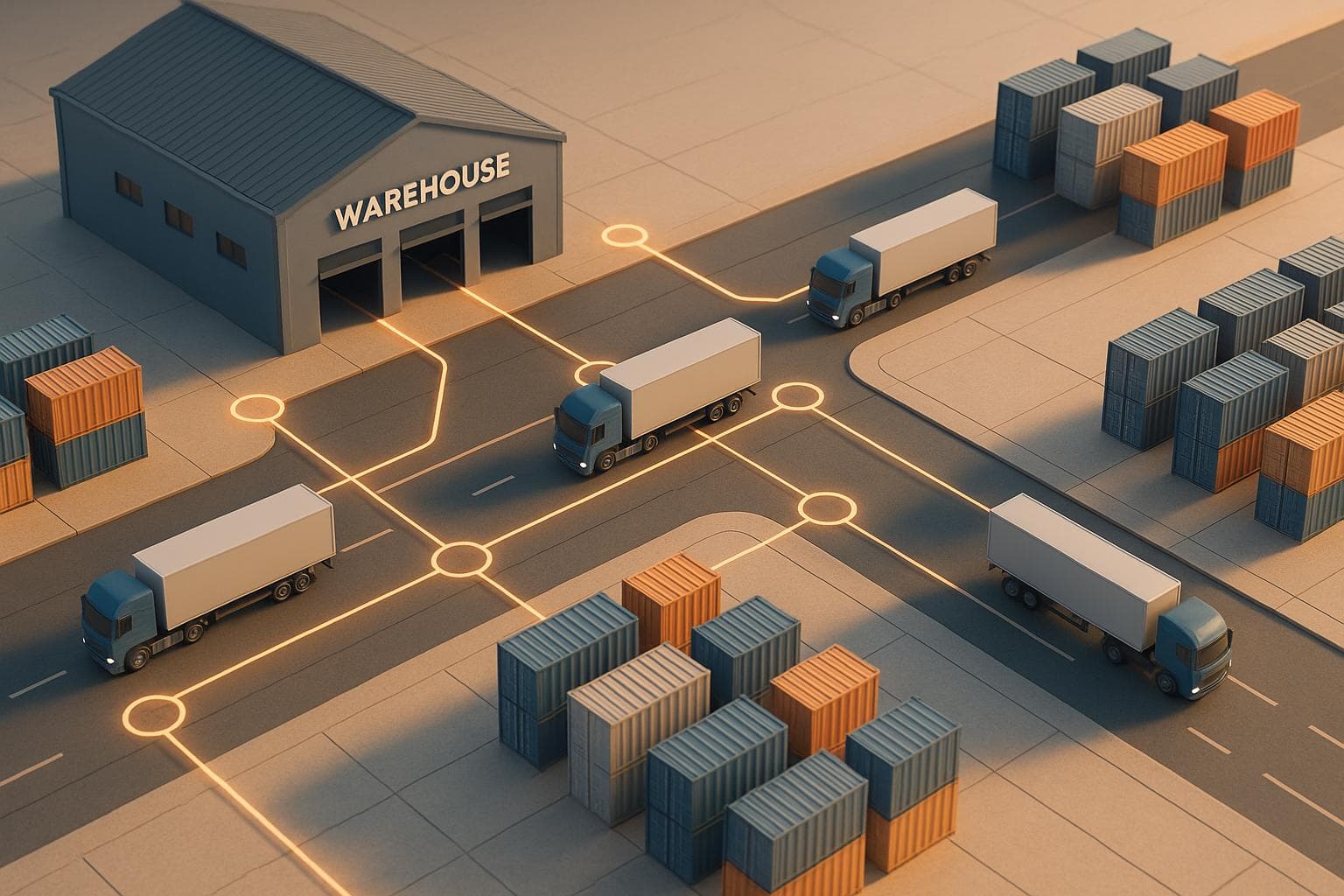
- Route Planning: AI creates efficient delivery routes by factoring in real-time traffic, weather, and vehicle capacity. This lowers fuel costs, shortens delivery times, and improves fleet utilization.
- Process Automation: AI automates repetitive tasks like order processing, invoice management, and quality control. This reduces errors, speeds up workflows, and frees up employees for higher-value work.
U.S. companies spent $2.6 trillion on shipping in 2023. By adopting AI, businesses have cut logistics costs by 15% and improved inventory levels by 35%. While many professionals recognize AI’s potential, most have yet to implement it, presenting a major opportunity for cost savings and operational improvements.
Can AI Effectively Cut Supply Chain Costs? - Smart Logistics Network
1. AI-Powered Demand Forecasting
Traditional demand forecasting often leans heavily on historical sales data and seasonal patterns. While this approach has its uses, it struggles to adapt to sudden market shifts or external influences. AI-powered demand forecasting steps in to fill those gaps by analyzing a broader range of factors, including weather conditions, social trends, economic indicators, and even competitor pricing. This deeper analysis helps businesses fine-tune their inventory management and streamline operations.
One of the biggest benefits of AI forecasting is its ability to reduce both overstocking and stockouts. By predicting demand spikes or dips with greater accuracy, businesses can avoid the high costs of holding excess inventory while ensuring popular products are always available when customers need them. The result? Better replenishment cycles and lower operational costs.
AI takes forecasting to a new level by uncovering patterns that traditional methods simply can't detect. For example, it can link viral social media trends to product demand or connect weather patterns to regional sales performance. These insights go far beyond what spreadsheet-based approaches can achieve.
Another strength of AI forecasting is its ability to handle complexity. It can scale to manage thousands of SKUs across multiple locations, updating predictions in real time as new data becomes available.
To get started with AI forecasting, businesses need high-quality data from sales, inventory, and external sources. A focused pilot program - often applied to high-volume products - can demonstrate the value of AI before rolling it out on a larger scale. Integration with ERP systems makes this process smoother, allowing for a gradual transition.
Beyond forecasting, AI also automates routine tasks like generating purchase orders and adjusting stock levels. This frees up analysts to focus on strategic planning, giving businesses a competitive edge in a fast-changing market.
2. AI-Based Inventory Management
AI is reshaping inventory management by making real-time adjustments possible. Using advanced algorithms, it evaluates a wide range of factors - like sales trends, supplier lead times, seasonal demand shifts, and market conditions - to determine the best inventory levels for each product at every location. These dynamic updates can lead to substantial cost savings across the supply chain.
One of AI’s strengths lies in balancing the need to meet service levels with the goal of minimizing carrying costs. It identifies slow-moving inventory, optimizes reorder quantities, and reduces waste, which cuts operating costs. The system also suggests markdowns, transfers, or discontinuations based on profitability, helping businesses make smarter decisions.
AI doesn’t just stop at individual products - it manages thousands of SKUs across various locations. By factoring in regional demand, transportation costs, and supplier limitations, it enables better allocation decisions. This comprehensive approach reduces overall inventory levels while still meeting service expectations.
Automation is another game-changer. Tasks like generating purchase orders, triggering transfers, and adjusting safety stock levels are handled automatically, cutting down on labor costs. Analysts can then focus on strategic projects instead of repetitive tasks. Plus, automation ensures consistent application of optimization strategies across all products and locations.
When integrated with ERP systems, AI takes inventory planning to the next level. It uses sales, supplier, and financial data to identify patterns in supplier reliability and product lifecycle stages. This leads to more accurate planning and fewer emergency purchases, which often come with hefty price tags.
AI-based inventory management delivers measurable results. It improves inventory turnover, reduces obsolescence, and lowers expediting costs. By enhancing cash flow and cutting the total cost of ownership for inventory assets, the technology directly reduces supply chain expenses and boosts ROI.
As businesses grow, AI scales right along with them. It handles increasing complexity without requiring additional planning staff, maintaining optimization performance even as operations expand. This makes it an invaluable tool for companies looking to manage growth efficiently.
3. AI Route Planning and Logistics
Transportation costs make up a large chunk of overall logistics expenses, so finding ways to optimize routes is a key strategy for cutting costs. AI algorithms are built to tackle the complex challenges of route planning, especially when juggling multiple delivery stops, different types of vehicles, and ever-changing conditions.
Modern AI-powered routing systems process real-time data like traffic updates, weather conditions, vehicle capacities, driver schedules, and customer delivery windows. By analyzing all this information, these systems create routes that reduce fuel use, shorten delivery times, and improve vehicle efficiency. This real-time adaptability allows for dynamic route planning, meaning routes can be adjusted on the fly as conditions evolve.
Dynamic route optimization is one of AI's standout features in logistics. Unlike traditional static routing, which plans routes just once a day, AI systems continuously monitor the environment. If disruptions like traffic accidents, sudden weather changes, or urgent delivery requests arise, the system instantly recalculates the best routes.
AI also shines when it comes to managing multi-stop deliveries - a task that grows exponentially more complicated with each additional stop. For example, with 10 delivery stops, there are over 3.6 million possible route combinations. AI algorithms can sift through these possibilities in seconds, balancing factors like delivery time windows, vehicle capacity, driver hours, and fuel efficiency to pinpoint the most effective route.
Another major win for AI routing is improved fleet utilization. By maximizing how much each vehicle carries and cutting down on empty miles, companies can make better use of their assets. This leads to lower capital expenses, reduced maintenance costs, and less fuel used per delivery.
Integration with telematics and GPS tracking systems adds another layer of efficiency. Real-time data on delivery times, traffic patterns, and driver behavior feeds back into the system, refining future route plans for even better performance.
Last-mile delivery, often the most expensive part of the logistics chain, benefits greatly from AI. Algorithms can group deliveries by location, optimize the sequence of stops to avoid unnecessary backtracking, and even suggest alternatives like pickup points or adjusted delivery windows to save time and money.
The scalability of AI routing systems makes them particularly useful for growing businesses. As delivery volumes increase and service areas expand, these systems handle the added complexity without the need for more planning staff - delivering even greater cost efficiencies as operations scale.
Getting started with AI routing can be as simple as deploying basic cloud-based solutions, while more integrated setups might take longer to implement. Either way, the long-term benefits often outweigh the initial effort.
AI routing also contributes to environmental goals by reducing fuel consumption and vehicle emissions. Many systems now include carbon footprint tracking, helping companies lower their environmental impact while cutting costs.
During peak seasons or demand surges, when manual route planning might struggle to keep up, AI systems maintain high levels of optimization. This ensures cost efficiency even during the busiest times of the year.
sbb-itb-1c5debd
4. AI Process Automation
AI process automation builds on advancements in forecasting, inventory management, and routing, offering a way to cut costs by taking over repetitive tasks that traditionally required human effort.
Manual tasks in supply chain operations often drain resources and create bottlenecks. By automating these processes, AI not only saves time but also reduces errors and improves efficiency.
Take order processing, for example. AI systems can handle tasks like validating orders, checking inventory, generating shipping documents, and sending confirmation emails. This reduces processing time significantly and lowers operational costs.
Another area where AI shines is invoice management. Instead of manually matching invoices, orders, and receipts, AI solutions can extract key data, verify its accuracy, flag any discrepancies, and route approvals to the right team members. This approach speeds up payment cycles and reduces processing costs.
In quality control inspections, AI-powered visual recognition systems bring consistency and precision. These systems can identify defects, measure dimensions, and ensure products meet quality standards - all without the downtime or fatigue associated with manual inspections.
Supplier communications also benefit from automation. AI chatbots and automated messaging systems can handle routine inquiries about order status, delivery schedules, and payment terms, allowing staff to focus on more strategic responsibilities.
The cost savings from AI process automation are hard to ignore. By reducing manual labor and minimizing errors that lead to delays or compliance issues, many companies see measurable improvements in both efficiency and profitability.
One of the standout benefits of AI automation is its scalability. Whether using basic cloud-based tools or fully integrated systems, AI solutions can grow alongside your business. However, the complexity of your current systems will influence how quickly these tools can be implemented. Basic solutions are relatively quick to deploy, while more comprehensive systems may require time for setup, data integration, and staff training. A solid data foundation is crucial - clean and organized data ensures smoother automation and helps justify the upfront investment.
The human element remains central to success. Research shows that companies with motivated, well-trained teams are better positioned to maximize AI's potential. Investing in workforce training and hiring employees with digital expertise often leads to better outcomes than simply deploying technology without addressing the human side.
Change management is another critical factor as automation reshapes job roles. Instead of eliminating positions, successful companies retrain employees to take on higher-value tasks that require creativity and problem-solving. This approach not only maintains morale but also ensures the full benefits of automation are realized.
During peak periods, like the holiday shopping season, AI automation proves its worth by handling volume spikes without the delays and errors that often accompany stretched human resources. This ability to maintain high performance under pressure highlights the advantages of automation over traditional methods.
Traditional vs AI Methods Comparison
When it comes to forecasting and automation, the performance gap between traditional methods and AI is hard to ignore. AI consistently outpaces traditional approaches in terms of accuracy, speed, and overall efficiency. Let’s break down the differences across key areas like forecasting, adaptability, implementation, scalability, and response time.
Traditional forecasting relies heavily on historical data and human judgment. While this approach has its merits, it often struggles to account for sudden market shifts or unexpected disruptions. Updating these systems can also be time-consuming. On the other hand, AI taps into real-time data streams - pulling insights from sources like weather patterns, social media activity, and economic indicators - to deliver forecasts with far greater precision.
During disruptions, traditional systems need manual intervention to update and recalibrate, which can slow down response times. In contrast, AI systems adjust automatically, seamlessly recalibrating to maintain strong performance even when events take an unpredictable turn.
Implementation is another area where traditional methods fall short. They often require extensive manual training, leaving room for errors. AI, however, offers automated processes that ensure consistent and reliable results with minimal human input.
As businesses grow, traditional methods can become increasingly costly and error-prone. Scaling up these systems often requires significant resources. AI, by comparison, scales effortlessly, delivering results without a proportional increase in cost or complexity.
Finally, traditional methods operate on periodic cycles, meaning insights are often delayed. AI systems, with their real-time capabilities, provide immediate insights, giving businesses a critical edge in decision-making.
Take inventory and route planning as examples: AI doesn’t just improve these processes - it compounds benefits over time. While adopting AI might mean higher upfront costs, the long-term savings from improved efficiency and reduced errors far outweigh these initial investments. Traditional methods, bogged down by inefficiencies, simply can’t compete. This makes AI a cornerstone of modern supply chain optimization.
Key Takeaways
AI is revolutionizing supply chain management by driving down costs in areas like demand forecasting, inventory management, route planning, and process automation. These technologies aren't just trimming expenses - they're reshaping how supply chains operate by delivering precision and efficiency that traditional methods simply can't match.
One of AI's standout strengths is its ability to provide highly accurate forecasts while adapting to unexpected disruptions without the need for manual adjustments. This adaptability translates into fewer stockouts, reduced carrying costs, and more streamlined operations - benefits that compound over time.
Yes, implementing AI requires an upfront investment. But the long-term payoff, through improved efficiency and fewer errors, far outweighs those initial costs. For organizations willing to take the leap, AI becomes a strategic tool for achieving sustained competitive advantages.
For supply chain leaders looking to stay ahead, subscribing to resources like SupplyChainBriefing offers actionable insights into AI-driven cost savings and operational improvements. These updates can help teams stay informed and effectively integrate AI strategies into their operations.
The real question isn't whether AI will transform supply chains - it’s whether your organization will lead the charge or play catch-up in this transformation.
FAQs
How is AI demand forecasting different from traditional methods, and what key factors does it analyze to improve accuracy?
AI-based demand forecasting takes a step ahead of traditional methods by incorporating real-time data, market trends, and external factors like weather patterns or economic shifts. Instead of focusing solely on historical data, AI adjusts to current conditions, offering predictions that are far more accurate.
Some of the key areas AI assesses include:
- Consumer behavior patterns to predict changes in demand.
- Seasonal trends and events that influence shopping habits.
- Supply chain disruptions or unexpected factors, such as natural disasters or geopolitical issues.
With these insights, businesses can make smarter decisions, streamline inventory management, and cut costs more efficiently.
What are the first steps to implement AI-based inventory management into an existing supply chain system?
To bring AI-based inventory management into your supply chain, start by assessing your current systems and the quality of your data. Make sure your inventory data is accurate, up-to-date, and formatted so that AI tools can process it easily. If your data isn’t reliable, the predictions and insights from AI won’t be either.
Next, pinpoint the specific problems or goals you want to tackle. Whether it’s cutting down on excess stock, improving demand forecasting, or avoiding stockouts, having clear objectives will guide you in choosing the AI tools and features that best fit your needs.
Lastly, select an AI solution that works well with your existing systems. Opt for platforms that are compatible with your software, easy to use, and backed by strong customer support. Don’t overlook the importance of training your team - helping them understand and effectively use the new tools is key to ensuring a smooth implementation and long-term success.
How can AI-powered route planning help companies cut costs and reduce carbon emissions?
AI-driven route planning enables businesses to make more informed decisions by streamlining delivery routes to cut down on travel distances and fuel usage. This approach helps reduce transportation expenses while also lowering carbon emissions, aligning with environmental goals.
Using real-time data such as traffic updates, weather forecasts, and delivery schedules, AI ensures vehicles follow the most efficient paths. The outcome? Fewer miles traveled, reduced fuel consumption, and a lighter environmental impact - all while enhancing delivery speed and keeping customers happier.